Arduino LCD I2C: Difference between revisions
From wikiluntti
| (11 intermediate revisions by the same user not shown) | |||
| Line 1: | Line 1: | ||
== Introduction == | == Introduction == | ||
<gallery> | |||
Lcd 16x2 front.jpg|The front view of the display | |||
Lcd 16x2 back1.jpg|Backview, and the I2C pins. | |||
</gallery> | |||
Hitachi HD44780 LCD controller, and I2C controller. 16X2 LCD without I2C circuit has sixteen pins. | Hitachi HD44780 LCD controller, and I2C controller. 16X2 LCD without I2C circuit has sixteen pins. The screen has 8 customizable character slots. | ||
Potentiometer at the back side. Screw that to get the figures on screen. | Potentiometer at the back side. Screw that to get the figures on screen. | ||
| Line 8: | Line 12: | ||
== Wiring and connecting == | == Wiring and connecting == | ||
Arduino Uno | Arduino Uno. A5 is the default SCL pin, and A4 is the default SDA pin for I2C communication. | ||
{| class="wikitable" | {| class="wikitable" | ||
|+ | |+ | ||
| Line 29: | Line 33: | ||
Check the address: Examples -> Wire -> I2C_scanner. | Check the address: Examples -> Wire -> I2C_scanner. | ||
== == | == Simple example == | ||
<syntaxhighlight lang="C"> | |||
#include <LiquidCrystal_I2C.h> | |||
LiquidCrystal_I2C lcd(0x27, 16, 2); // I2C address 0x27, 16 column and 2 rows | |||
void setup(){ | |||
lcd.init(); | |||
lcd.backlight(); | |||
} | |||
void scrollMessage(int row, String message, int delayTime, int totalColumns) { | |||
for (int i=0; i < totalColumns; i++) { | |||
message = " " + message; | |||
} | |||
message = message + " "; | |||
for (int p = 0; p < message.length(); p++) { | |||
lcd.setCursor(0, row); | |||
lcd.print(message.substring(p, p + totalColumns)); | |||
delay(delayTime); | |||
} | |||
} | |||
void loop(){ | |||
lcd.clear(); | |||
lcd.setCursor(0, 0); | |||
lcd.print("Hello World"); | |||
scrollMessage(1, "www.luntti.net", 250, 16); | |||
} | |||
</syntaxhighlight> | |||
== Create own fonts == | |||
Large fonts: https://www.instructables.com/Custom-Large-Font-For-16x2-LCDs/ | |||
See more at https://www.arduinointro.com/articles/projects/create-custom-characters-for-the-i2c-lcd-easily. | |||
<syntaxhighlight lang="C"> | |||
#include <LiquidCrystal_I2C.h> | |||
LiquidCrystal_I2C lcd(0x27, 16, 2); | |||
// Make custom characters: | |||
byte Heart[] = { | |||
B00000, | |||
B01010, | |||
B11111, | |||
B11111, | |||
B01110, | |||
B00100, | |||
B00000, | |||
B00000 | |||
}; | |||
byte Bell[] = { | |||
B00100, | |||
B01110, | |||
B01110, | |||
B01110, | |||
B11111, | |||
B00000, | |||
B00100, | |||
B00000 | |||
}; | |||
void setup() { | |||
lcd.begin(16, 2); // Specify the LCD's number of columns and rows: | |||
// Create new characters: | |||
lcd.createChar(0, Heart); | |||
lcd.createChar(1, Bell); | |||
lcd.clear(); | |||
} | |||
void loop() { | |||
lcd.setCursor(0, 1); | |||
lcd.write(byte(0)); | |||
lcd.setCursor(2, 1); | |||
lcd.write(byte(1)); | |||
} | |||
</syntaxhighlight> | |||
== Dinosaur game == | == Dinosaur game == | ||
<youtube>cjSjUN7kgP4</youtube> | |||
* See the video description for the files. | |||
** The Arduino file at https://drive.google.com/drive/folders/1mdnJol7ILM9eJCJ9jjvYxAZvTqESruLu | |||
Latest revision as of 16:27, 6 January 2026
Introduction
-
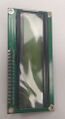
The front view of the display
-
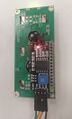
Backview, and the I2C pins.


Hitachi HD44780 LCD controller, and I2C controller. 16X2 LCD without I2C circuit has sixteen pins. The screen has 8 customizable character slots.
Potentiometer at the back side. Screw that to get the figures on screen.
Wiring and connecting
Arduino Uno. A5 is the default SCL pin, and A4 is the default SDA pin for I2C communication.
| LCD I2C | Arduino Uno |
|---|---|
| Vin | 5V |
| GND | GND |
| SDA | A4 |
| SCL | A5 |
Libraries
Liquid_Crystal_i2c by Frank de Brabander 1.12 works.
Check the address: Examples -> Wire -> I2C_scanner.
Simple example
#include <LiquidCrystal_I2C.h>

LiquidCrystal_I2C lcd(0x27, 16, 2); // I2C address 0x27, 16 column and 2 rows

void setup(){
  lcd.init();
  lcd.backlight();
}

void scrollMessage(int row, String message, int delayTime, int totalColumns) {
  for (int i=0; i < totalColumns; i++) {
    message = " " + message;
  }
  message = message + " ";
  for (int p = 0; p < message.length(); p++) {
    lcd.setCursor(0, row);
    lcd.print(message.substring(p, p + totalColumns));
    delay(delayTime);
  }
}

void loop(){
  lcd.clear();
  lcd.setCursor(0, 0);
  lcd.print("Hello World");

  scrollMessage(1, "www.luntti.net", 250, 16);
}
Create own fonts
Large fonts: https://www.instructables.com/Custom-Large-Font-For-16x2-LCDs/
See more at https://www.arduinointro.com/articles/projects/create-custom-characters-for-the-i2c-lcd-easily.
#include <LiquidCrystal_I2C.h>
LiquidCrystal_I2C lcd(0x27, 16, 2);

// Make custom characters:
byte Heart[] = {
  B00000,
  B01010,
  B11111,
  B11111,
  B01110,
  B00100,
  B00000,
  B00000
};
byte Bell[] = {
  B00100,
  B01110,
  B01110,
  B01110,
  B11111,
  B00000,
  B00100,
  B00000
};


void setup() {
  lcd.begin(16, 2);  // Specify the LCD's number of columns and rows:

  // Create new characters:
  lcd.createChar(0, Heart);
  lcd.createChar(1, Bell);

  lcd.clear();
}

void loop() {
  lcd.setCursor(0, 1);
  lcd.write(byte(0));
  lcd.setCursor(2, 1);
  lcd.write(byte(1));
}
Dinosaur game
- See the video description for the files.
- The Arduino file at https://drive.google.com/drive/folders/1mdnJol7ILM9eJCJ9jjvYxAZvTqESruLu


